A toddler throws themselves on the floor when you tell the class that it is time to clean up. A preschooler refuses to share and pushes another friend. During outdoor play, another child is seen quietly standing by the slides, unwilling to participate.
Moments like these are common in our early childhood classroom.
What would you do in these situations? How can you respond in ways that can teach, support, and strengthen the children's social-emotional development?

What is Social-Emotional Learning?
Social-emotional learning (SEL) is the process through which children develop the knowledge, skills, and attitudes needed to understand and manage emotions, build healthy relationships, show empathy, and make decisions to reach goals (CASEL 2026). These skills develop starting in infancy and continue to grow throughout childhood and into adulthood. All children, young people, and even adults need it!
In early childhood education, SEL is intentionally nurtured through caring relationships, play-based learning, supportive environments, and meaningful interactions with educators and peers.
As educators, we can intentionally teach and model social-emotional skills to help support children in regulating their emotions, communicating their needs, and solving problems collaboratively.

The Five Competencies of SEL
The Collaborative for Academic, Social, and Emotional Learning (CASEL) identifies five core competencies that form the foundation of social-emotional learning. These five interrelated areas include: (CASEL 2026)
- Self awareness: the ability to recognize one's emotions, thoughts, values, and preferences while developing confidence in a positive sense of self.
- Self-management: the ability to manage emotions, cope with challenges, regulate behaviour, and work towards achieving goals.
- Social awareness: the ability to understand the feelings and perspectives of others, show empathy, and appreciate diversity.
- Relationship skills: the ability to build healthy relationships through communication, cooperation, sharing, conflict resolution and teamwork.
- Responsible decision making: the ability to make caring, safe, and respectful choices by considering the consequences of actions and well-being of others.
The following diagram shows the SEL Framework through CASEL: 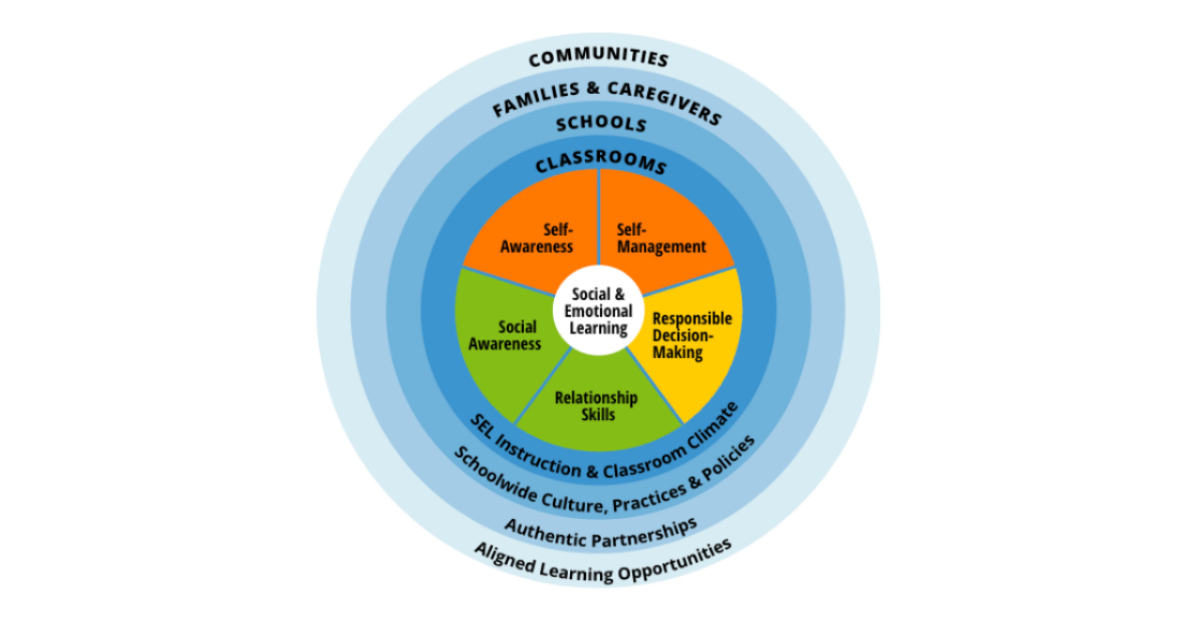
These competencies are developed through every day interactions and experiences occurring in classrooms, schools, through families and caregivers, and in the community.
By intentionally embedding opportunities to practice these skills throughout the day for young children, educators are helping to lay the foundation for social and emotional development and success.
SEL Developmental Milestones: From Infancy to Pre-Kindergarten
Social-emotional skills develop rapidly during the first five years of life. While every child develops at their own pace, there are common milestones that educators and caregivers can use to understand and support children's social-emotional growth: (CDC 2026)
1. Infants (Birth - 12 months)
At this age, infants begin forming secure attachments with their caregivers. They express a range of emotions, respond to facial expressions, and voices, and seek comfort when they feel distressed.
For example, they might smile back when an educator or caregiver smiles, make eye contact during feeding, and reach to be picked up. Responsive, nurturing interactions help infants establish a sense of safety and trust in their relationships.
2. Toddlers (1 - 3 years)
During this stage, toddlers begin to recognize and express emotions, develop independence, engage in simple peer interactions, and learn early self-regulation skills.
For example, they might say "mad" or "sad" when they feel upset, show early signs or interests in cooperative play with other children, and follow simple routines with reminders from an educator.
3. Preschoolers (3 - 4 years)
At this age, preschool children are becoming more aware of their own emotions and the emotions of people around them. They begin showing empathy, taking turns, sharing, cooperating during play, and following simple social rules.
For example, they may be seen comforting others when they see a friend is upset, changing their behavior depending on their setting or environment, or taking initiative to engage in play with someone else.
4. Pre-kindergarteners (4 - 5 years)
At this age, pre-k children are continuing to develop and strengthen their emotional regulation, problem solving, and friendship skills. They become more aware and more capable of managing frustrations, demonstrating empathy towards others, and making thoughtful decisions in social situations.
For example, they may be seen playing collaboratively with peers to complete a task or goal, resolving minor disagreements with friends and saying "sorry" after hunting someone's feelings, and trying self-regulation strategies to help calm themselves.
Promoting SEL in the Classroom
Social-emotional learning is most effective when it is integrated into everyday classroom experiences for children. Every interaction, routine, and play experience can be an opportunity for educators to nurture and promote emotional awareness, self-regulation, and social skills with children.
Integrating SEL into Daily Routines
Daily routines offer children with predictability and opportunity for them to practice social-emotional skills. Some simple strategies may include: (Ulutas et al., 2021)
- Greeting each child by their name every morning to help foster a sense of belonging
Use an emotion check-in during arrival or morning circle (e.g. "How are you feeling today?")
- Practice waiting and turn taking during meals, transitions, and group activities
- Reflect on positive interactions and problem solving as a whole group at the end of the day during closing circle time (e.g. "What was your favourite part of today?")
Teaching and Modeling Emotional Awareness
Children can learn emotional skills by observing educators and caregivers around them. Educators play a critical role in helping children identify, label, and understand their emotions. Some simple strategies may include: (Ulutas et al., 2021)
- Name emotions as they occur throughout the day (e.g. "You look a bit frustrated because the tower fell over")
- Read variety of books to explore feelings of characters and problem solving strategies
- Use visuals to support emotional development with feelings charts or emotion cards
- Model empathy by acknowledging children's emotions and validating their experience (e.g. "I see that you feel angry that your tower fell down. You worked really hard on that. Let's think about what we can do next. I can help you."
Supporting Self-Regulation Strategies
Educators can support self-regulation strategies by offering calm, consistent support in helping them self-regulate during difficult situations. Some simple strategies may include: (Ulutas et al., 2021)
- Teaching calming strategies such as deep breathing, counting, or stretching
- Incorporate movement breaks to allow children to regulate their emotions and take breaks to stretch their bodies when needed
- Create a cozy or calming corner in the classroom designated for children to use if they want a calming space to regulate their emotions
- Offer children choice in their day to day routines and activities to promote independence
- Model above strategies and remind children during difficult situations

Reflect on it
Reflective practice helps educators refine their approach and continuously improve the quality of their teaching.
You might consider the following self-reflection questions as you think about SEL and how to support children through social-emotional development opportunities in your classroom.
- How do I create a classroom environment where every child feels safe, valued, and a sense of belonging?
- How are SEL opportunities currently embedded throughout my daily routines, transitions, and activities?
- What is one change I can make to create more meaningful SEL opportunities?
- How do I model managing my own emotions during challenging moments?
- What tools can I use to intentionally teach skills such as sharing, empathy, cooperation, and problem solving?
Conclusion
Social-emotional learning (SEL) is a critical part of early childhood education and can be promoted through everyday moments, interactions and relationships that educators create with children. By intentionally integrating SEL into routines and activities, educators are helping children develop the confidence and skills needed to navigate their future.
Further Learning with Lillio
For educators seeking to further their understanding of social-emotional learning in the classroom, Lillio Academy will be offering the course "Social-Emotional Learning (SEL): Practical Strategies" coming soon in the upcoming months. The course will provide early childhood educators with practical, developmentally appropriate strategies to intentionally support SEL for infants, toddlers, preschoolers, and pre-kindergarten children. Participants will learn how to create nurturing learning environments, embed SEL into everyday routines, and respond to children's social-emotional needs with confidence.
Whether you're new to this method or looking to refine your skills, these learning offerings are excellent resources for your professional growth!